
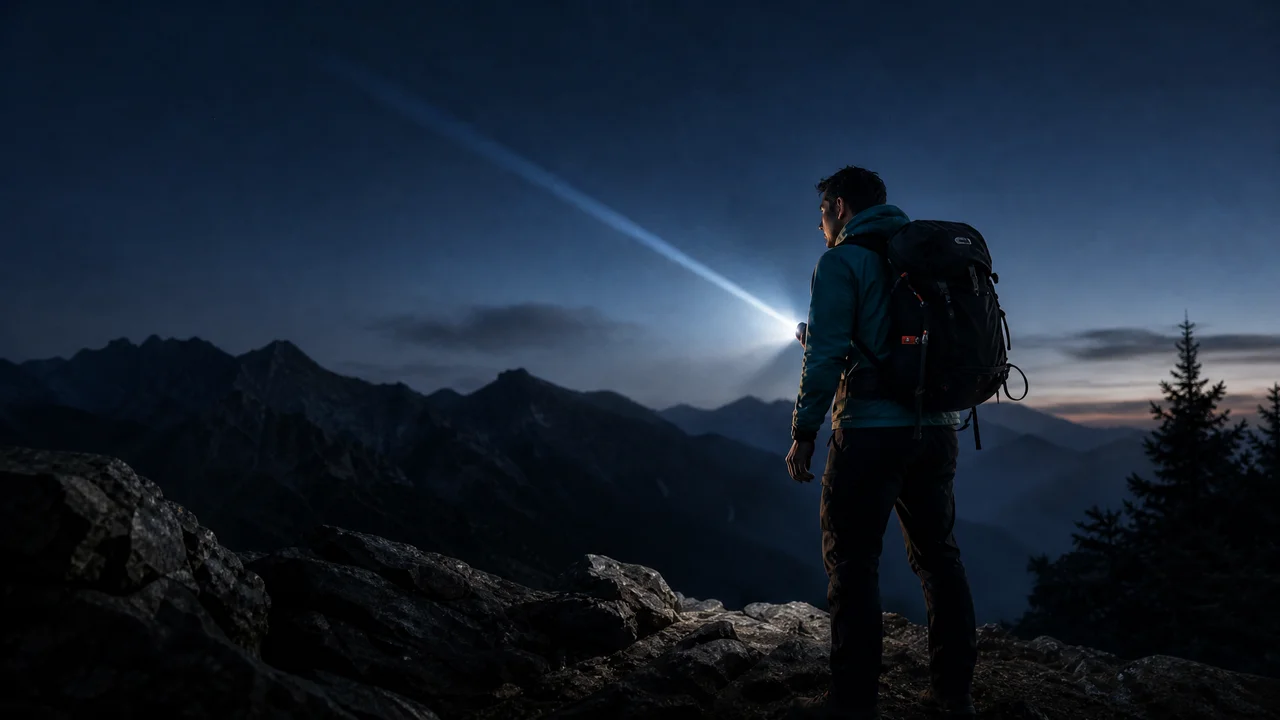
Quick answer: The best hunting flashlight should provide a balanced beam, enough usable distance for the terrain, reliable low-mode runtime, simple controls, and dependable water resistance. Beam quality and runtime are usually more important than choosing the flashlight with the highest lumen rating.
A reliable hunting flashlight helps you navigate trails, inspect equipment, identify obstacles, locate gear, and safely return after dark. However, lumen output alone does not determine whether a flashlight will perform well in the field.
To choose the best hunting flashlight, compare its beam distance, beam pattern, light color, runtime, battery system, waterproof rating, impact resistance, and controls.
What Should You Look for in a Hunting Flashlight?
| Feature | Why It Matters | Recommendation |
|---|---|---|
| Beam distance | Determines how far ahead you can detect terrain and obstacles. | Match the distance to your hunting environment. |
| Beam pattern | Balances long-range visibility with nearby awareness. | Choose a defined hotspot with useful surrounding spill. |
| Runtime | Keeps the light available during long trips and emergencies. | Prioritize efficient low and medium modes. |
| Water resistance | Protects against rain, mud, and accidental immersion. | Check the exact IPX testing conditions. |
| Durability | Helps the flashlight survive drops and rough field use. | Choose an impact-tested aluminum body. |
1. Compare Beam Distance, Not Just Lumens
Lumens measure the total amount of visible light produced by a flashlight. Beam distance measures how far that light can project at a defined intensity. Two flashlights with the same lumen output can have very different beam distances because their reflectors, lenses, and beam patterns are different.
Under the ANSI/PLATO FL 1 portable-lighting standard, beam distance is measured at the point where the beam produces 0.25 lux. Actual visibility also depends on weather, terrain, background contrast, and the user's eyesight.
Dense woods: A balanced beam helps reveal branches, roots, and nearby hazards.
Open fields: A concentrated hotspot improves distant visibility.
General outdoor use: Combine moderate throw with enough spill for navigation.
2. Choose the Right Beam Pattern
A hunting flashlight beam normally contains a bright central hotspot and a wider area of surrounding spill. The hotspot provides distance, while the spill helps you see nearby terrain.
Flood beam: Illuminates a wide nearby area but usually has limited reach.
Throw beam: Concentrates light into a narrow hotspot for longer-distance visibility.
Balanced beam: Combines a defined hotspot with useful spill for walking and inspection.
A balanced beam is usually the most practical choice for a general-purpose flashlight for hunting because it provides distance without creating excessive tunnel vision.
3. Red vs. Green vs. White Hunting Lights
Light color should be selected according to the task. No single color is ideal for every hunting situation.
| Light Color | Best Used For | Limitations |
|---|---|---|
| Red light | Low-output navigation and preserving human dark adaptation. | Provides less visible detail and perceived range. |
| Green light | Scanning and tasks where strong visible contrast is helpful. | Can distort natural colors. |
| White light | Navigation, inspection, obstacle identification, and emergencies. | High output can reduce dark adaptation. |
Deer possess color vision and are especially sensitive to short- and middle-wavelength light. Claims that deer are completely unable to see a particular visible light color should therefore be treated cautiously.
What About a Blood Tracking Flashlight?
When selecting a blood tracking flashlight, prioritize color detail, controlled brightness, and a usable flood beam. Excessive output can create glare on wet leaves, while strongly colored beams can change how natural colors appear.
No flashlight color guarantees that blood will become clearly visible in every environment. Search slowly, hold the light at a low angle, and mark the last confirmed sign before moving forward.
4. Prioritize Useful Runtime
Maximum brightness is normally used for short periods. Low and medium modes are more important during long walks, equipment setup, and unexpected delays.
Compare runtime for the brightness modes you will actually use. Under the ANSI/PLATO FL 1 standard, runtime is measured until output falls to 10% of its initial measurement.
Rechargeable lithium-ion batteries provide strong output and convenient charging. Larger-capacity cells, such as a 5000mAh 21700 battery, can offer a practical balance of output and runtime.
5. Understand IPX Waterproof Ratings
A waterproof hunting flashlight should handle rain, wet vegetation, mud, and accidental drops into water. Different IPX ratings cover different exposure conditions.
| Rating | Protection | Typical Outdoor Use |
|---|---|---|
| IPX6 | Protected against powerful water jets. | Heavy rain and forceful water exposure. |
| IPX7 | Protected against temporary immersion. | Accidental drops into shallow water. |
| IPX8 | Protected during immersion beyond one meter under manufacturer-defined conditions. | Wet environments with a higher immersion risk. |
IPX8 does not automatically mean that a flashlight is designed for diving. Always check the manufacturer's specified depth and testing conditions.
6. Check Durability, Material, and Grip
Hunting equipment is frequently exposed to drops, dirt, rain, and temperature changes. A durable flashlight should have a secure grip, protected controls, impact resistance, and a body that manages heat effectively.
Aerospace-grade aluminum alloy provides a strong strength-to-weight balance and efficient heat dissipation. A HAIII hard-anodized finish improves resistance to scratches, wear, and corrosion.
A Practical Hunting Flashlight Example
Recommended Outdoor Flashlight
SUNWAYMAN P1000 Rechargeable Flashlight
The SUNWAYMAN P1000 is a compact general-purpose outdoor flashlight suitable for trail navigation, equipment inspection, campsite use, and emergency lighting.
1050-lumen maximum output
217-meter maximum beam distance
Up to 12 hours of low-mode runtime
5000mAh 21700 rechargeable battery
Type-C smart fast charging
IPX8 waterproof rating, tested to 2 meters underwater
1.5-meter impact resistance
Aerospace aluminum alloy with HAIII hard-anodized finish
Hunting Flashlight Selection Checklist
Choose beam distance according to the terrain.
Look for a balanced hotspot and surrounding spill.
Compare runtime on low and medium modes.
Select light colors according to the task.
Check the exact IPX test conditions.
Choose an impact-tested body with a secure grip.
Make sure the controls are simple to operate.
Carry a backup power source or secondary light.
Frequently Asked Questions
How many lumens should a hunting flashlight have?
A flashlight between approximately 500 and 1500 lumens can cover many outdoor tasks, but beam pattern, beam distance, and sustainable runtime are more important than maximum output alone.
What is the best light color for hunting?
Red light is useful for low-output tasks, green light can improve visible contrast, and white light provides the most natural detail. The best choice depends on the task and local regulations.
Is IPX8 better than IPX6?
IPX6 tests protection against powerful water jets, while IPX8 tests immersion under manufacturer-defined conditions. The better rating depends on the type of water exposure you expect.
Can a regular flashlight be used for hunting?
Yes. A durable rechargeable flashlight with a useful beam, low-output mode, dependable runtime, and adequate waterproofing can support navigation, inspection, and emergency use.
Is it legal to use a flashlight while hunting?
Artificial-light laws vary by location, species, season, and activity. Always check current regulations published by the relevant wildlife authority before hunting.
Final Recommendation
The best hunting flashlight is not simply the brightest model. Choose a flashlight with a beam suited to your terrain, enough runtime for the full trip, clearly defined waterproof protection, durable construction, and controls that remain easy to use in darkness.
For general hunting and outdoor use, prioritize balanced performance over extreme specifications. A practical flashlight should help you see clearly, operate reliably in wet conditions, and remain ready when plans change.
Source: SUNWAYMAN