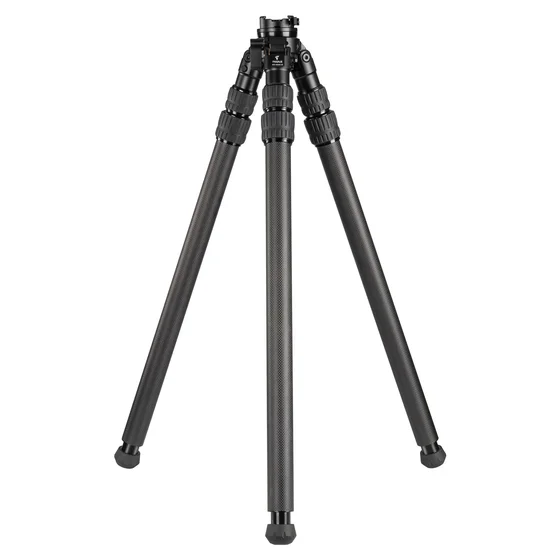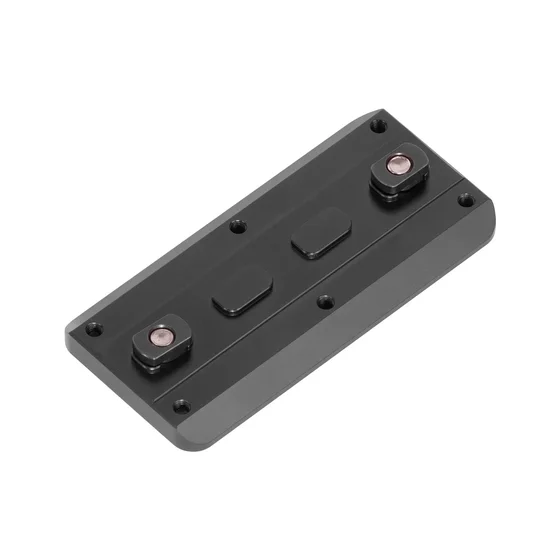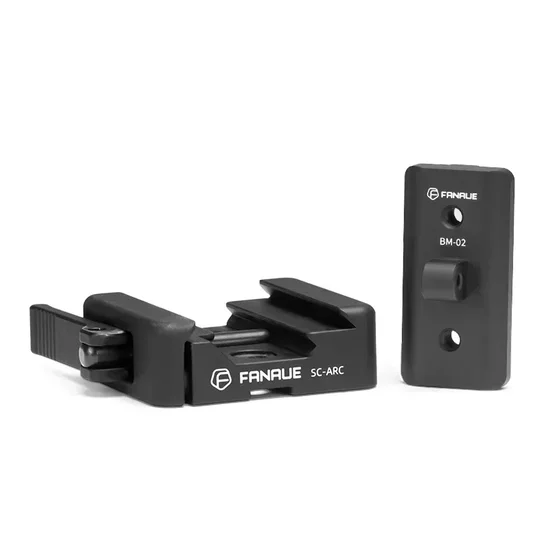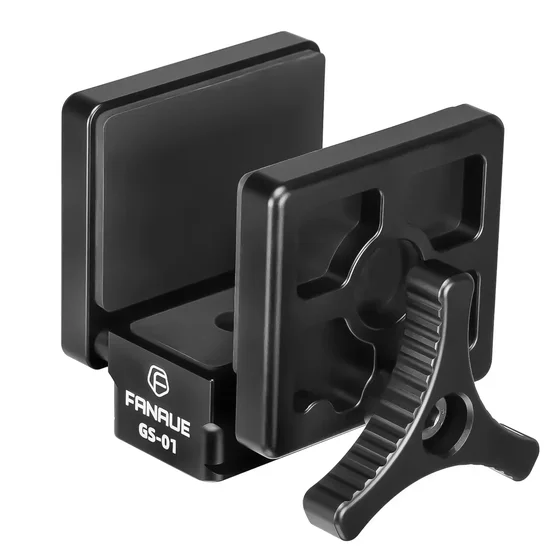

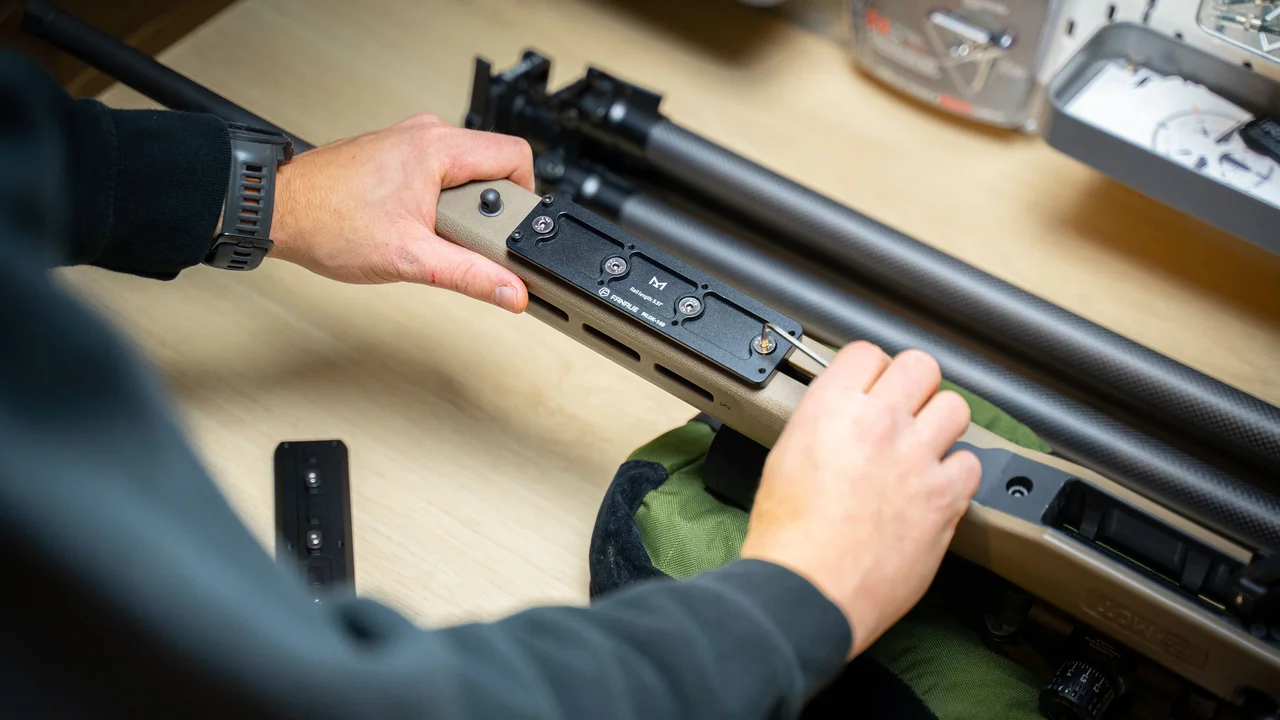
A stable hunting shooting setup is not just a tripod. It is a complete support system made of four parts: the tripod, the head, the clamp and the rail or adapter attached to your rifle or optic.
When these parts work together, your setup becomes faster to deploy, easier to adjust and more dependable in real field conditions. For hunters, stability matters for more than comfort. A solid support system helps you glass longer, reduce unnecessary movement and make more controlled decisions in the field.
This guide explains how to build a practical hunting shooting setup using a carbon fiber hunting tripod, hunting ball head, Arca Swiss quick release clamp, M-LOK Arca rail or Picatinny to Arca adapter.
Safety note: Always follow local hunting laws and firearm safety rules. A tripod can improve support, but it never replaces safe firearm handling, muzzle awareness and responsible judgment.
1. Start With the Tripod: Your Foundation
The tripod is the foundation of the entire setup. If the legs flex, slip or sit too high for the position you are using, the rest of the system will never feel stable.
For hunting, a good tripod should balance three things: weight, stiffness and height range. Carbon fiber hunting tripods are popular because they are lighter to carry than aluminum while still offering strong support for rifles, spotting scopes and binoculars.
What to look for in a hunting tripod
A wide stance for better stability on uneven terrain
Strong leg locks that do not slip under load
Enough height for standing, kneeling and sitting positions
A load rating that safely exceeds your rifle, optic and tripod head combined
Compatibility with the ball head, clamp or rail system you plan to use
For most hunters, the best tripod is not always the tallest or heaviest one. It is the one you can actually carry, deploy quickly and trust when the ground is uneven.
2. Add the Right Head: Control Your Angle Without Fighting the Setup
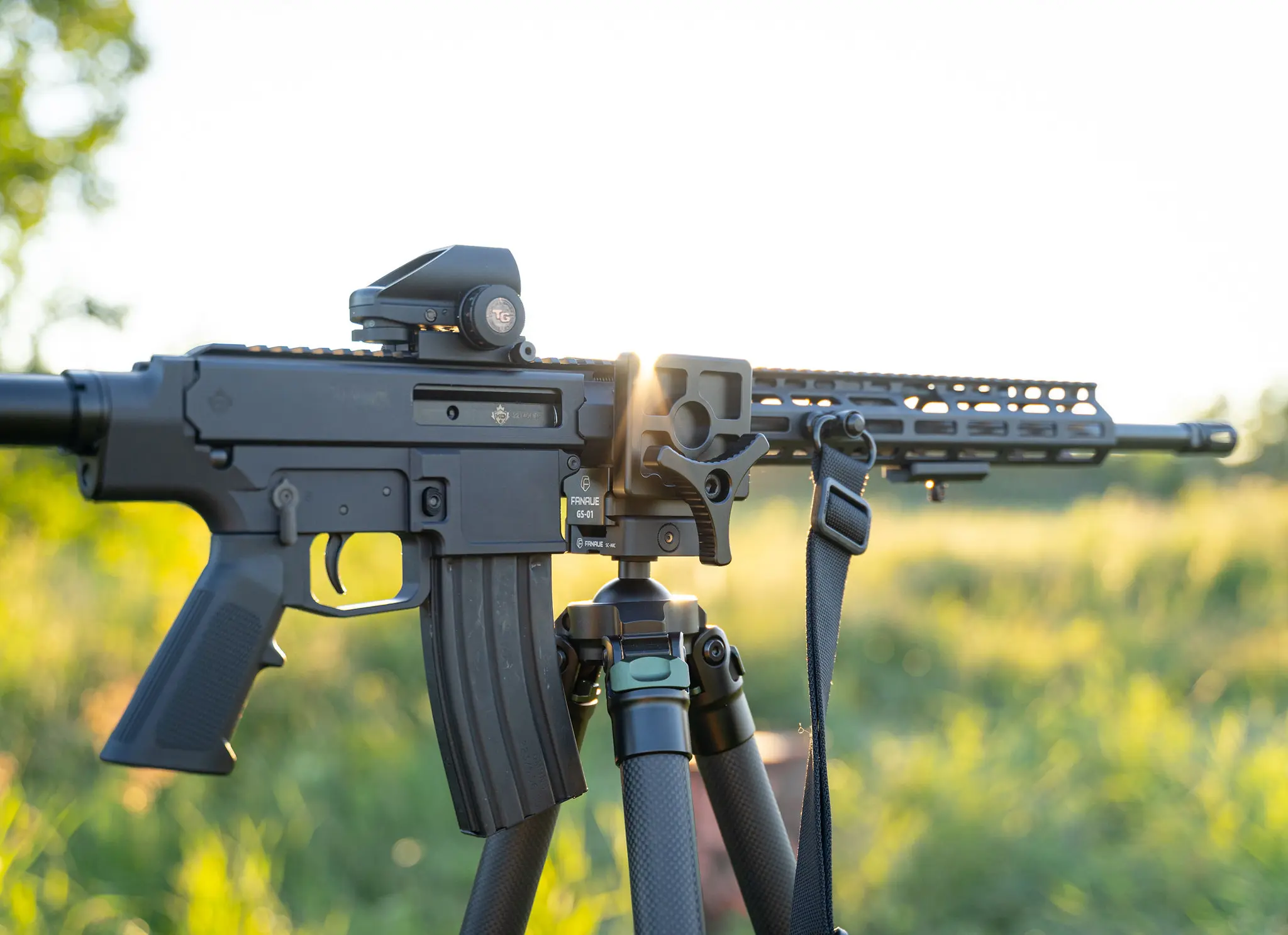
The tripod head connects your tripod to the rifle, optic or clamp. For hunting and shooting support, hunting ball heads are useful because they allow fast angle changes in multiple directions.
A ball head lets you pan, tilt and level your setup without moving the tripod legs every time. That is useful when tracking movement across a hillside, switching from glassing to shooting support or adjusting to a steep uphill or downhill angle.
The key is control. A weak head may drift under weight. A head with poor tension control can feel either too loose or too stiff. A better hunting ball head should hold position securely while still allowing smooth adjustment when you need it.
Ball head features that matter
Strong load capacity
Smooth tension adjustment
Low-profile design
Arca-Swiss or Picatinny compatibility
A secure locking mechanism
A ball head is especially useful when paired with an Arca Swiss quick release clamp, because it lets you move between compatible rifles, optics and accessories without rebuilding the entire setup.
3. Use a Quick Release Clamp for Speed and Repeatability
A quick release clamp is what makes the system practical in the field. Without it, you may need to thread, tighten or adjust hardware every time you switch gear. With the right clamp, you can attach or remove a rifle, spotting scope or accessory much faster.
Arca Swiss quick release clamps are widely used because they work with dovetail-style rails and plates. In the shooting world, Arca-style rails have become popular because they allow equipment to slide forward or backward to fine-tune balance.
A good clamp should do three things
Lock securely without shifting
Release quickly when needed
Match the rail or plate on your rifle or accessory
Compatibility is important. “Arca” is often used as a general term, but not every rail, clamp or adapter fits the same way. Always check whether your clamp is designed for standard Arca-style dovetail, Picatinny, M-LOK Arca rails or a specific locking system.
4. Choose the Right Rail or Adapter: Arca, M-LOK and Picatinny
The rail or adapter is the connection point on the rifle side. It determines how securely your rifle attaches to the tripod system.
Arca rails are useful because they give you a longer mounting surface. Instead of being locked into one attachment point, you can slide the rifle forward or backward to find a better balance point. This is helpful when your setup includes a heavier scope, suppressor, bipod or front accessory.
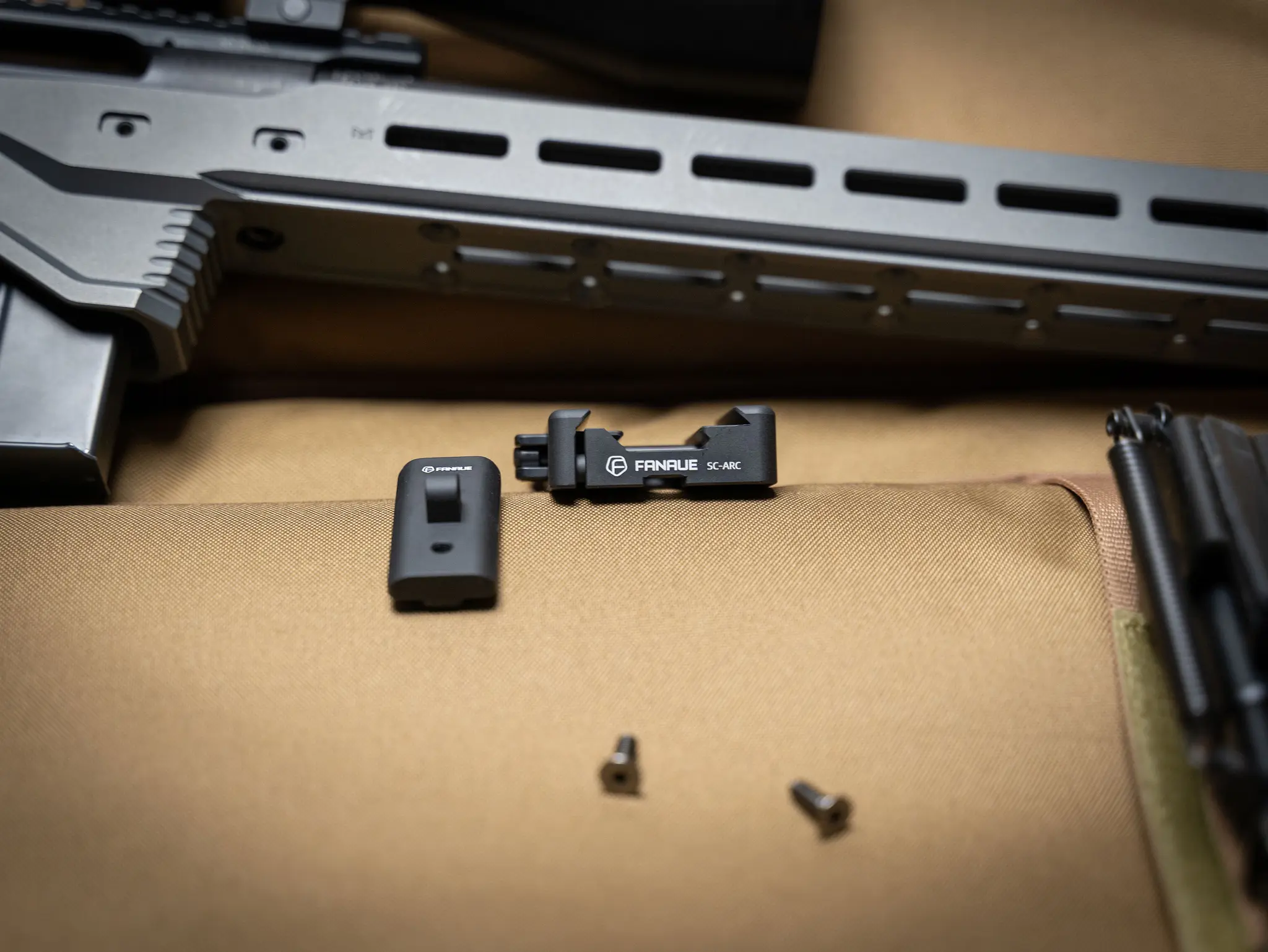
M-LOK Arca rails are designed for rifles with M-LOK handguards. They give you an Arca-compatible interface while using the existing M-LOK slots on the firearm.
Picatinny to Arca adapters are useful when your rifle already has a Picatinny rail but you want to connect it to an Arca-style tripod clamp. This lets you bridge older or more common rifle mounting systems into a modern tripod setup.
Match the adapter to your rifle
M-LOK handguard: use an M-LOK Arca rail
Existing Picatinny rail: use a Picatinny to Arca adapter
Direct Arca-compatible rifle or plate: use an Arca quick release clamp
Optics or accessories: check plate width, screw size and clamp compatibility
5. Build the Setup Around the Way You Hunt
A tripod setup for mountain hunting is different from a setup for a blind, truck-based scouting or long glassing session.
If you hike long distances, weight matters. A carbon fiber hunting tripod with a compact ball head may be the best choice. If you mostly hunt from fixed positions, a heavier tripod may be acceptable because it can provide more planted stability. If you switch between binoculars, spotting scopes and rifle support, quick release compatibility becomes more important than any single component.
Think in terms of the full workflow
Carry the tripod comfortably.
Deploy the legs quickly.
Level or angle the head smoothly.
Attach the rifle, binocular or spotting scope securely.
Adjust balance without fighting the hardware.
Remove the device quickly when moving.
The best setup is the one that reduces movement and wasted time without adding unnecessary complexity.
6. Common Mistakes to Avoid
One common mistake is buying a strong tripod but pairing it with a weak head. Another is using a good ball head with a clamp or rail that does not match correctly. Stability is only as strong as the weakest connection point.
Choosing a tripod only by maximum height
Ignoring total load weight
Mixing rail and clamp standards without checking fit
Using short plates that do not balance the rifle well
Over-tightening parts to compensate for poor compatibility
Carrying a setup that is too heavy for your hunting style
A stable system should feel controlled, not forced. If you need excessive tension to keep everything from moving, the balance point or mounting interface may be wrong.
7. A Practical Fanaue Setup Path
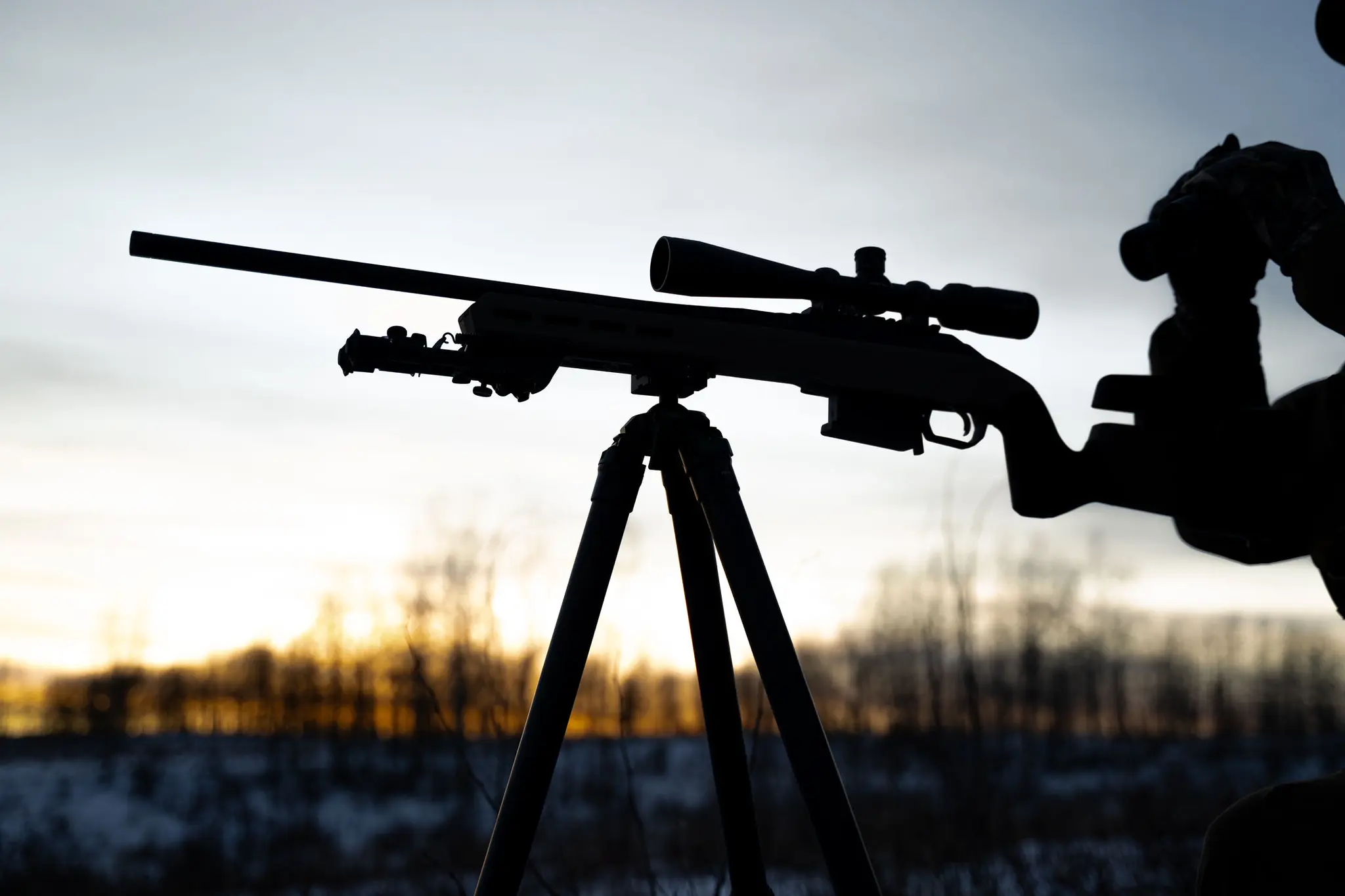
For a complete hunting shooting setup, start with the main support category and build outward:
Hunting Gear: tripods, monopods, ball heads, clamps and adapters
Carbon Fiber Hunting Tripods: the field support foundation
Hunting Ball Heads: the angle and movement control point
Arca Swiss Quick Release Clamps: the fast connection point
M-LOK Arca Rails or Picatinny to Arca Adapters: the rifle-side interface
Build a More Stable Hunting Setup
Explore Fanaue hunting tripods, ball heads, quick release clamps and rifle tripod adapters for stable field support.
Conclusion
A stable hunting shooting setup is built as a system, not as a single product. The tripod gives you the foundation. The ball head gives you angle control. The quick release clamp gives you speed and repeatability. The Arca rail, M-LOK rail or Picatinny adapter gives you the secure connection to your rifle or optic.
When these parts are matched correctly, your setup becomes easier to carry, faster to deploy and more stable in the field. For hunters who use tripods for glassing, shooting support and outdoor observation, that combination is what makes the difference between a collection of accessories and a dependable field system.